
ECUST Technology Developed under the leadership of Professor Fuchen Wang Passed Sinopec Achievement Appraisal
Recently, the research team led by Professor Fuchen Wang from the Institute of Clean Coal Technology at ECUST, in collaboration with Sinopec Ningbo Zhenhai Refining & Chemical Co., Ltd., Sinopec Ningbo Engineering Co., Ltd., and Sinopec Ningbo Technology Research Institute Co., Ltd., developed the Integrated Heavy Oil Gasification and Waste Liquid Co‑processing Technology.
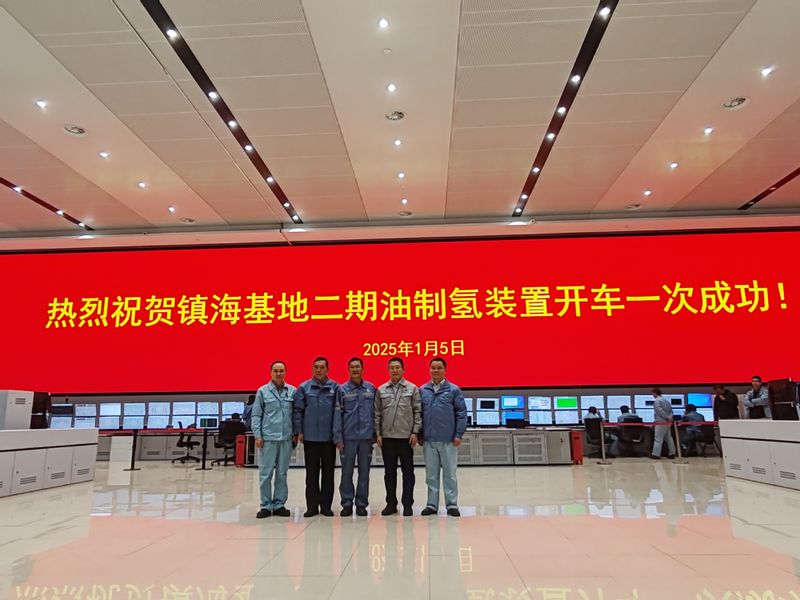
The technology passed the achievement appraisal organized in Beijing by Sinopec. The appraisal committee concluded that the overall technology has reached an internationally leading level, opening up a new domestic pathway for the resource utilization of heavy residues in China’s refining and chemical industry.
The efficient and low-carbon conversion of heavy oil, residual oil, and refinery waste is an industry challenge that urgently needs to be overcome in the petroleum refining sector. To overcome these industrial bottlenecks, the Institute of Clean Coal Technology at ECUST leveraged the university’s advantages in fundamental theoretical research and formed an industry-university-research collaborative team with multiple Sinopec units. Through sustained innovation in core technologies, the team overcame several key technical barriers.
It revealed the synergistic reaction mechanism between the major components of heavy oil and wastewater, clarified the mechanism governing heavy oil atomization and breakup, and pioneered a six-channel high-efficiency gasification burner for the co-processing of inferior heavy oil and waste liquid.
It also invented a heavy oil gasifier featuring a coupled recirculation zone-plug flow zone structure, enabling optimized regulation of flow, heat and mass transfer, and reaction processes within the reactor, effectively suppressing carbon black formation and increasing the carbon conversion rate of the feedstock to over 99.5%.
Furthermore, the team elucidated the coupling mechanism between energy and mass transfer throughout the process and established an integrated system combining efficient gasification, staged purification, and efficient waste heat recovery, significantly reducing overall energy consumption while achieving both energy savings and greener production. The integrated heavy oil gasification and waste liquid co‑processing technology was successfully developed.
At Zhenhai Refining and Chemical, the technology has been used to build a heavy oil-to-hydrogen demonstration unit rated at 270,000 Nm3/h overall (single-furnace design capacity: 136,000 Nm3/h for CO+H2), which achieved one-time feed-in in January 2025 and has currently entered the long-term stable operation phase.
The technology opens up a new technical pathway for hydrogen production and syngas production in large refineries, providing core technical support for the petrochemical industry’s quality and efficiency improvement, green and low-carbon transformation, and the achievement of the “Dual Carbon” goals. It has been successfully licensed and applied to new key projects at Sinopec Shanghai Petrochemical, Maoming Petrochemical, and other facilities, featuring broad application scenarios, market competitiveness, and economic and social benefits.