 09 Nov 2026

A natural gas non-catalytic partial oxidation unit at Shanghai Huayi Industrial Gases Co., Ltd. has passed an on-site assessment organized by the China Petroleum and Chemical Industry Federation. The unit employs a high-temperature, non-catalytic conversion technology for methane-rich gas using pure oxygen, developed under the leadership of Professor Fuchen Wang of the Institute of Clean Coal Technology at ECUST.
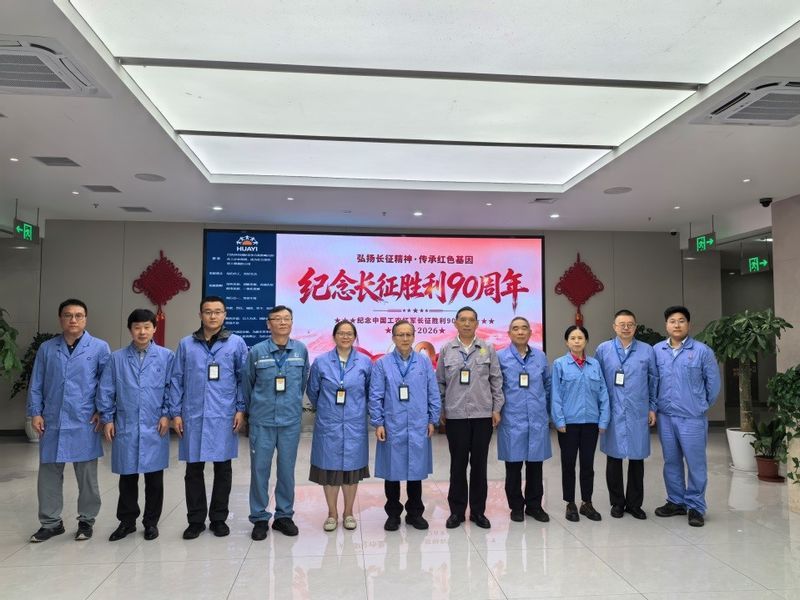
The unit commenced trial operation in June 2025 and began producing qualified chemical products, including acetic acid and ammonia. It achieved safe, stable, long-term operation at full load under optimized conditions.
The unit adopts an innovative process featuring complete CO₂ recycling, achieving zero CO₂ emissions across the entire system. Operational results showed that the unit met or exceeded the assessment benchmarks in a range of key indicators, including the service life of the conversion burner and the tube sheet of the fire-tube boiler, the boiler’s tube-side operating temperature, the quantity of by-product saturated steam, and the outlet temperature of the syngas.
Other indicators included the production capacity of effective gases (CO + H₂) in the converted gas, both per unit and for the entire installation, methane content in the converted gas, specific natural gas and oxygen consumption, natural gas preheating temperature, ammonia nitrogen concentration in discharged wastewater, raw-material carbon utilization efficiency, and operating duration. The unit reduces CO₂ emissions by more than 91,000 metric tons annually, marking another significant achievement in the industrial-scale engineering of syngas production in China.
The technology for producing syngas through high-temperature, non-catalytic conversion of methane-rich gas using pure oxygen offers broad feedstock adaptability and considerable potential for further application. It can serve as a key enabling technology for the efficient conversion of biogas into high-value green methanol. This offers a new pathway for biogas utilization.
Professor Fuchen Wang, the project’s technical lead, noted that when biogas costs RMB 1.7 per standard cubic meter, the cost of green methanol can be kept below RMB 3,300 per metric ton by integrating the process with established methanol synthesis technology, giving the process strong economic viability and market competitiveness.
In the future, coupling the process with green hydrogen and green oxygen could enable the complete conversion of carbon in biogas. With green electricity priced at RMB 0.30 per kWh, the cost of green methanol could be kept below RMB 3,700 per metric ton.