 09 Nov 2026

Recently, the 9th ECUST Humanities Lecture took place at the Xuhui Campus. Professor Jian Mao, a professor and writer at East China Normal University (ECNU) and Vice Chairman of the China Literature and Art Critics Association, delivered a lecture titled “Rehearsing Romance: Love on the Silver Screen over a Century.” She guided the audience through the evolution of romantic narratives in cinema and explored the cultural implications behind them.
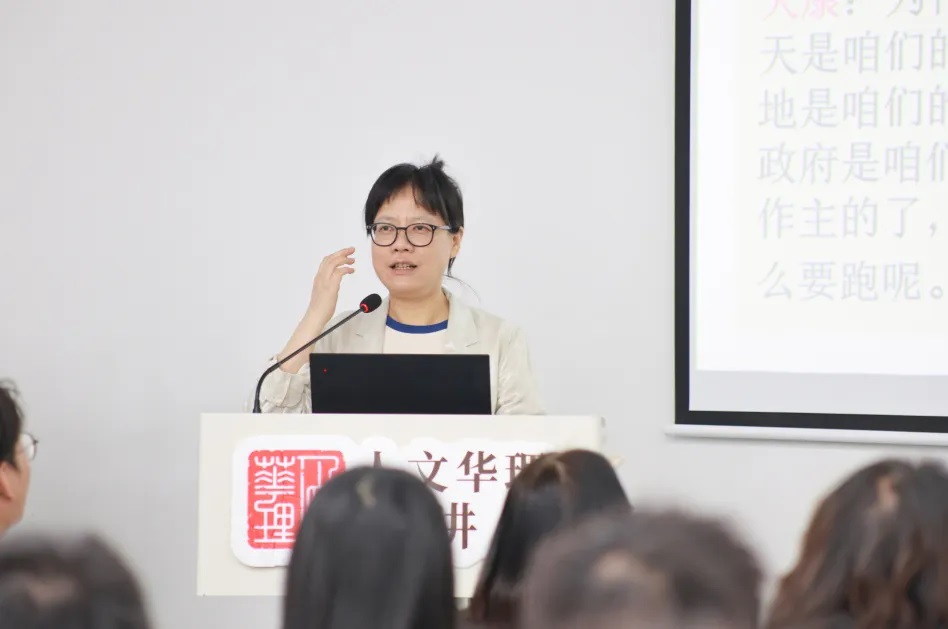
Tracing the century-long history of cinema, with a focus on Chinese romance films, Mao outlined how love narratives have shifted across different eras. In the 1930s and 1940s, war served as a major backdrop. Films like Gone with the Wind, Waterloo Bridge, and Casablanca established a classic model of cinematic romance through parting and regret, while the Chinese classic Spring in a Small Town showcased emotional turbulence with Eastern restraint. Mao noted that early Soviet films emphasized the connection between love, collective ideals, and national destiny, a model that influenced China’s cinema. After the founding of the People’s Republic of China, films such as The Story of Liubao and Five Golden Flowers closely integrated love with labor and the spirit of the times.
Mao analyzed the shift of love narratives from the public to the private sphere. Early New China films often placed personal emotions within broader communities and collective ideals. In the 1970s and 1980s, romantic narratives increasingly focused on private life. The direct declaration of love in the Japanese film Manhunt brought new expressions to Chinese audiences, while Romance on Lushan Mountain marked a milestone, opening a new window for the public to understand modern life. Visually, the camera moved from vast natural settings to indoor spaces, focusing more on characters’ inner worlds.
In the 1990s, love narratives became more diverse. Films like Farewell My Concubine, Chungking Express, and Comrades: Almost a Love Story explored loneliness, searching, and the complexity of romantic experiences. Mao noted that, in recent years, the rise of dialect films has revitalized emotional expression with their authentic, grounded textures. She also compared different screen adaptations of The Legend of the White Snake, noting that re-telling classic stories reflects evolving societal understandings of love and female subjectivity.
During the Q&A, Mao responded to students’ questions on contemporary youth attitudes toward love and marriage. She emphasized that the meaning of love lies not merely in a perfect outcome, but in the exploration of oneself, others, and life experiences.
The lecture was chaired by Professor Rongrong Fu, Vice Dean of the School of Art Design and Media at ECUST. By bridging film, historical eras, and cultural logic, Professor Mao provided the audience with fresh perspectives on cinema, social change, and emotion.