 09 Nov 2026

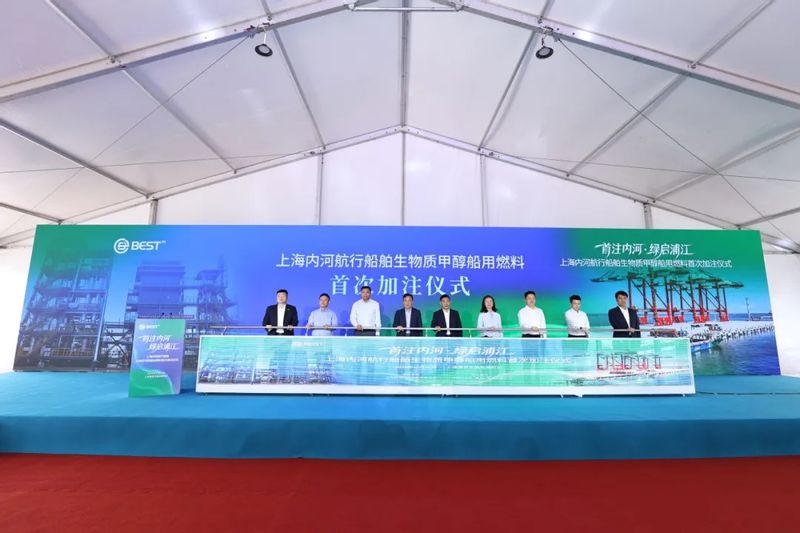
Recently, the first bunkering of biomass methanol marine fuel for inland vessels in Shanghai took place at Luodong Container Terminal. The green methanol used was produced using the BESTm (Biogas Energy Science and Technology to Methanol) technology, jointly developed by ECUST and partner institutions. This marks a successful demonstration application of original technology from ECUST in marine fuel bunkering, following validation at a thousand-ton-scale pilot plant.
Supported by a special project from the Science and Technology Commission of Shanghai Municipality (STCSM) and based at the State Key Laboratory of Chemical Engineering and Low-Carbon Technology, a research team led by Professor De Chen, Chair Professor at ECUST and Member of Academia Europaea, collaborated with partners including Shanghai CEO Technology Co., Ltd., Shanghai Chengtou Group, Sinopec Shanghai Engineering Co., Ltd., and SIPG Energy. The team developed the BESTm technology, enabling full carbon conversion of methane and carbon dioxide in biogas into green methanol, achieving a carbon utilization rate of nearly 100%.
The thousand-ton-scale pilot plant completed the full process flow, producing methanol with a purity of 99.99% and a full life-cycle carbon reduction rate exceeding 95%, meeting international marine green methanol fuel standards. The project obtained dual ISCC EU and ISCC PLUS certifications. The technology passed an evaluation organized by the China Petroleum and Chemical Industry Federation (CPCIF), where the committee agreed that the process, catalysts, and key reaction equipment have reached internationally leading levels.
This bunkering is another landmark achievement following the technological breakthrough, pilot operation, and product certification, expanding applications of biomass methanol marine fuel in inland shipping. It establishes a practical model for green fuel substitution in inland vessels and supports Shanghai Port in expanding green methanol bunkering business.
Moving forward, ECUST will leverage strengths in chemical engineering and national high-level research platforms to deepen technological research and engineering validation. The university aims to accelerate large-scale and industrial application of this original achievement, contributing to national “Dual Carbon” goals and the green transformation of the Shanghai International Shipping Center.